
For 2021-22, it projected the economy to clock a growth of 10.6 per cent.

SBI was the biggest loser in the Sensex pack, shedding 2.40 per cent, followed by Yes Bank, Bharti Airtel, L&T, Sun Pharma, M&M, ICICI Bank, ONGC, RIL, Asian Paints, Vedanta and HUL, which lost up to 2.37 per cent.

In reflection of their growing congruence in areas of defence and security, the two sides, following the Modi-Mitsotakis talks, agreed to set up an institutional dialogue at the level of national security advisors, and boost defence industrial cooperation.
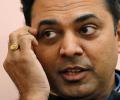
Chief Economic Advisor (CEA) K V Subramanian will be leaving the finance ministry and returning to academia on completion of his three-year term. The government had appointed Subramanian, an ISB Hyderabad professor, as the CEA in December 2018. He had succeeded Arvind Subramanian, who quit the position close to a year ahead of his extended tenure. Subramanian's three-year term would have come up for renewal in December but he decided to return to academia.

Bhavish Aggarwal, the founder of ride-hailing firm Ola who disrupted the electric scooters market in the country, is planning to launch an electric sports car in 2024. The plan will put it in competition with Indian players, such as the Tata group and Mahindra & Mahindra, and global giants like Tesla and Hyundai. Aggarwal, recently, took a group of reporters to the firm's design studio at the Ola campus in Bengaluru where his teams are working on several EVs, including scooters, motorcycles, sedans, and SUVs - and even robotaxis.
Expectations were probably too high from Narendra Modi.

India on Tuesday told the UN General Assembly that the days when a few nations set the agenda and expected others to fall in line are over, underlining that its presidency of the G20 sought to focus on key concerns of the many, not just the narrow interests of a few.

Though Beijing asserts the Dalai Lama's successor needs its approval, observers say it remains concerned as the present Panchen Lama, the number two spiritual leader who was appointed by it after unseating the boy nominated by the Dalai Lama, has not gained much traction in Tibet.

Short-term gains are always unpredictable.

India and the US on Thursday said they are looking forward to the reconvening of the India-US Trade Policy Forum later this year to further enhance trade relationship and identify new areas for engagement.

India's human development indicators show that deprivation extends well beyond the 22 per cent of population who live below the official poverty line.

...and getting GDP to measure India's data economy, recommends Ajit Balakrishnan.

'At this moment, investors should look for relative value within sectors and clear visibility (third-wave-or-not) on earnings delivery.'

Modi said his critics were seeing slowdown in the last two quarters but were ignoring that the BJP government had brought down inflation from 10% to 2.5%.

The government on May 17 formed a five-member committee.

The objective of the visit is to grow business relations between the two countries, following Prime Minister Narendra Modi's visit to Japan
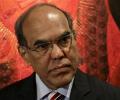
Subbarao said, short-term as well as medium-term prospects or Indian economy continue to be grim. Fiscal deficit is going to be much higher, the debt burden much larger and the financial sector will be in a worse shape.

New Delhi can strengthen its leverage by having better relations with the two than they have with each other.

The real risk is that the core assumption -- that the votes for a candidate sponsored by an alliance will at least equal the sum total of its parts -- proves to be facile, observes T N Ninan.

The weak April-June quarter (first quarter, or Q1) results of the largest listed specialty chemical maker, SRF, and multiple global headwinds for the sector are expected to weigh on the prospects of Indian specialty chemical companies in 2023-24 (FY24). Stocks in the sector (down 7-18 per cent) have underperformed the benchmarks (up over 10 per cent) in the past three months, and given the multiple challenges, the trend is likely to continue. Kotak Institutional Equities expects a very weak quarter (Q1FY24) for the sector due to destocking, demand weakness across certain critical end-use industries, and price erosion amid intense competition from Chinese suppliers.

S&P Global Ratings on Thursday said the Indian economy is projected to grow at 11 per cent in the current fiscal, but flagged the "substantial" impact of broader lockdowns on the economy. In its report on Asia-Pacific Financial Institutions, S&P said the control of COVID-19 remains a key risk for the economy. New infections have spiked in recent weeks and the country is in the middle of a second pandemic wave.

'The BJP's real weapons are Hindutva, organisation and finance.'

'The minimum holding period for equities should be three years.' 'Try goal-based investing.' 'Link your equity portfolios to specific goals such as retirement, purchase of a house or car...'

Terrorism is the biggest curse for the society, he said, adding that if there is any country which bore the maximum brunt of terrorism, it is India.
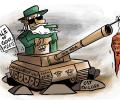
The promise of a less suspicious government is surprising. What about the disconnect between the new business stance and earlier push to dictate the narrative in politics and public life, wonders T N Ninan.

Although there are serious risks facing the US economy in the coming year, there is also a good chance that growth will be substantially stronger than it has been since before the recession began.

Macroeconomic data announcement, Omicron situation and global trends will be the major driving factors for the equity market in the first week of the new year 2022, according to analysts. In what turned out to be a historic year, the Indian stock indices went past multiple milestones and the 30-share Sensex made an annual gain of 10,502.49 points or 21.99 per cent in 2021. Religare Broking Vice-President (Research) Ajit Mishra said, "This week marks the beginning of a new month and participants will be closely eyeing some crucial high-frequency data like monthly auto sales, India manufacturing PMI and India services PMI. "Besides, updates on the COVID-19 situation and performance of global markets will also be critical."
